

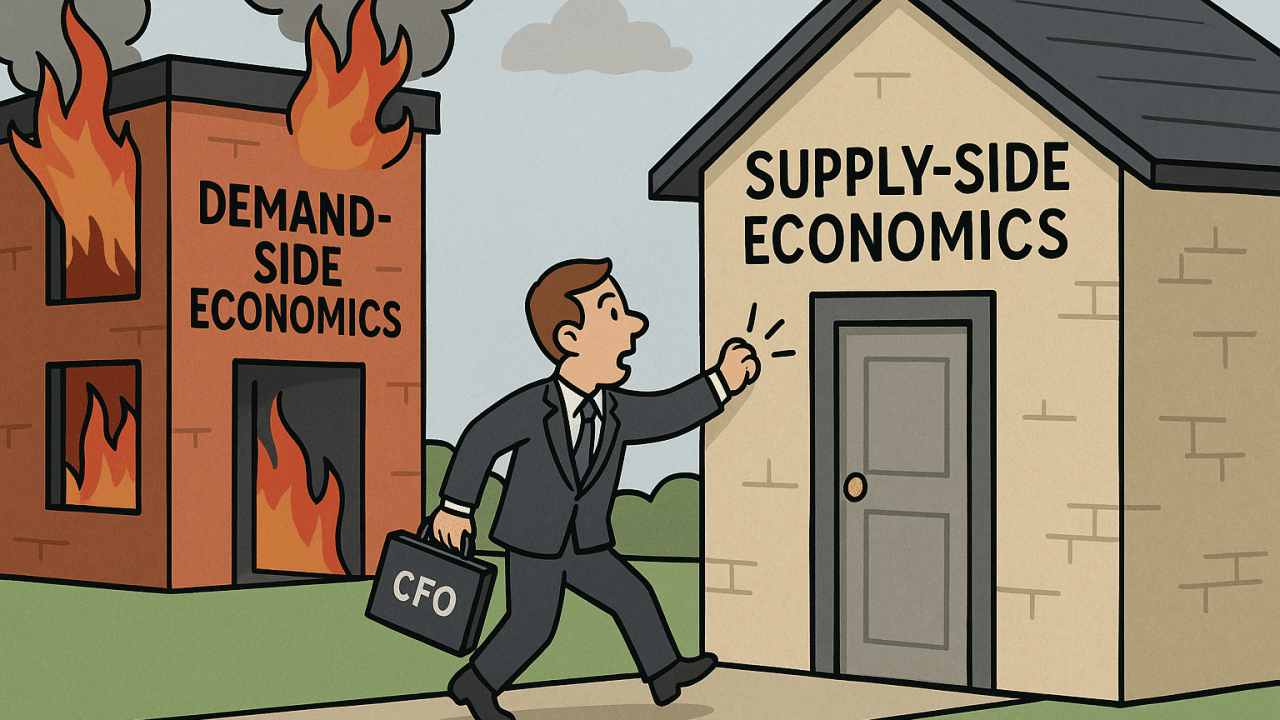
Part 6 — What Supply-Side Economics Looks Like in Healthcare
For forty years, health plans have tried to control cost through demand-side strategies: utilization suppression, care gap closure, risk adjustment, and pricing.
The result has been margin erosion, rising medical loss ratios (MLR), soaring administrative costs, and stagnant outcomes in both Medicare Advantage and Medicaid managed care.
The problem isn’t execution. It’s the model.
𝗗𝗲𝗺𝗮𝗻𝗱-𝘀𝗶𝗱𝗲 𝗲𝗰𝗼𝗻𝗼𝗺𝗶𝗰𝘀 𝗿𝗲𝗮𝗰𝘁𝘀 𝘁𝗼 𝗿𝗶𝘀𝗸 𝗮𝗳𝘁𝗲𝗿 𝗶𝘁 𝗮𝗽𝗽𝗲𝗮𝗿𝘀.
𝗦𝘂𝗽𝗽𝗹𝘆-𝘀𝗶𝗱𝗲 𝗲𝗰𝗼𝗻𝗼𝗺𝗶𝗰𝘀 𝗴𝗲𝗻𝗲𝗿𝗮𝘁𝗲𝘀 𝘃𝗶𝘀𝗶𝗯𝗶𝗹𝗶𝘁𝘆 𝗯𝗲𝗳𝗼𝗿𝗲 𝗶𝘁 𝗮𝗽𝗽𝗲𝗮𝗿𝘀.
𝗦𝘂𝗽𝗽𝗹𝘆–𝗦𝗶𝗱𝗲 𝗘𝗰𝗼𝗻𝗼𝗺𝗶𝗰𝘀 𝗗𝗲𝗳𝗶𝗻𝗲𝗱
Supply-side economics in healthcare means creating a continuous, scalable supply of real-time risk data that feeds the system upstream before claims exist.
Instead of waiting 180 days for claims data to show who is sick, supply-side economics identifies who is trending toward high-cost risk while they are still classified as “healthy” in administrative systems.
This flips the economics:
- Demand-side: suppresses and reacts to utilization.
- Supply-side: surfaces and redirects risk before cost hits.
𝗪𝗵𝘆 𝗜𝘁 𝗖𝗵𝗮𝗻𝗴𝗲𝘀 𝘁𝗵𝗲 𝗠𝗮𝘁𝗵
Supply-side economics gives health plans something they’ve never had: a leading indicator.
- Medical Loss Ratio (MLR): stabilizes as fewer members convert into high-cost claims.
- Utilization: shifts from acute and emergency settings into lower-cost preventive pathways.
- Care gaps: get eliminated continuously through early engagement, not chased retroactively.
- Administrative costs: shrink because interventions are proactive and targeted, not reactive and universal.
This is how supply-side economics finally creates predictable margin performance instead of constant firefighting.
𝗪𝗵𝘆 𝗜𝘁 𝗪𝗼𝗿𝗸𝘀 𝗪𝗵𝗲𝗿𝗲 𝗗𝗲𝗺𝗮𝗻𝗱-𝗦𝗶𝗱𝗲 𝗙𝗮𝗶𝗹𝘀
Demand-side models depend on lagging signals: claims, HEDIS scores, Stars Ratings, and retrospective risk adjustment. By the time they trigger, the cost has already landed.
Supply-side economics runs on member-generated data streams that arrive months before claims do. This gives plans:
- Earlier identification of rising-risk cohorts,
- Longer lead time to intervene clinically and operationally,
- Lower-cost intervention points
- A compounding margin effect instead of a recurring cost spike.
It converts population health management from a reactive cost center into a proactive margin engine.
𝗪𝗵𝗮𝘁 𝗧𝗵𝗶𝘀 𝗨𝗻𝗹𝗼𝗰𝗸𝘀 𝗳𝗼𝗿 𝗣𝗮𝘆𝗲𝗿𝘀
Supply-side economics doesn’t just improve performance, it rewrites the entire economic model of a health plan.
Right now, payers operate on backward-facing economics:
- Forecasts depend on last year’s claims.
- Risk pricing depends on documented diagnoses.
- Quality revenue depends on retrospective gap closure.
- Actuarial models assume cost is inevitable and only adjustable at the margins.
This is demand-side math, it treats cost as fixed and tries to ration it.
Supply-side economics breaks that logic by injecting new, real-time risk inputs into the model BEFORE cost is incurred. It shifts the foundation from lagging expense management to forward risk allocation.
𝗛𝗼𝘄 𝘁𝗵𝗶𝘀 𝗿𝗲𝘀𝗵𝗮𝗽𝗲𝘀 𝗰𝗼𝗿𝗲 𝗹𝗶𝗻𝗲𝘀 𝗼𝗳 𝗯𝘂𝘀𝗶𝗻𝗲𝘀𝘀:
Medicare Advantage:
- Smooths volatility in Stars Ratings by creating leading indicators of quality performance.
- Lowers future Medical Loss Ratio (MLR) by reducing the flow of members into high-cost status.
- Reduces over-reliance on risk adjustment revenue by generating actual cost avoidance.
Medicaid managed care:
- Helps plans manage to Health Benefit Ratio (HBR) caps without starving care.
- Reduces high-acuity conversion in rising-risk populations, improving outcomes and contract performance.
Commercial and employer-sponsored plans:
- Stabilizes cost trend without requiring premium increases or benefit reductions.
- Turns population health from a loss leader into a predictable margin driver.
This is the shift:
From expense accounting to risk capital allocation.
From lagging indicators to leading indicators.
From firefighting to forecasting.
Supply-side economics is the first population health model built to generate margin as a function of prevention, not reaction.
𝗧𝗵𝗲 𝗜𝗻𝗳𝗹𝗲𝗰𝘁𝗶𝗼𝗻 𝗣𝗼𝗶𝗻𝘁
Health plans have reached the ceiling of demand-side economics.
They can’t suppress utilization further without backlash.
They can’t close gaps fast enough to keep up with CMS cut point shifts.
They can’t keep scaling administrative overhead.
They can’t price lower to cover operational failure.
Supply-side economics is the only path forward.
It doesn’t try to win the old game. It rewrites it.
